Why freeze-dried fruit is becoming the premium snack of the decade
Whole strawberries that snap like glass, a coat of real Belgian chocolate and a clean label. Here is why buyers across Europe keep asking for freeze-dried fruit, and what happens to it on our lines in Maribor.
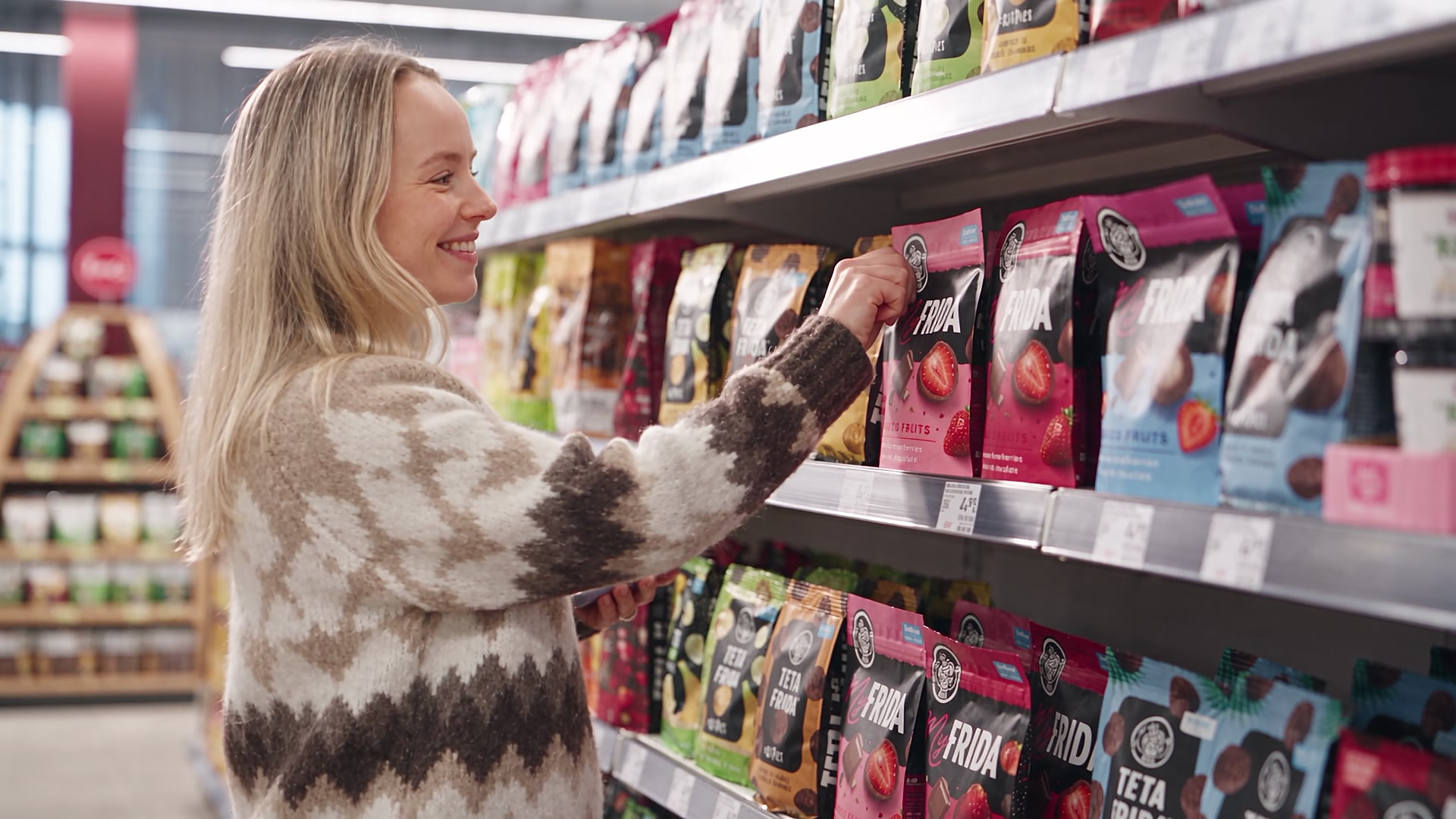
Ten years ago freeze-dried fruit lived in the outdoor aisle, next to instant coffee and camping meals. Today it sits at the checkout of Europe's biggest retailers, dipped in chocolate and priced like a small treat. The shift did not happen because of marketing. It happened because the product finally tasted the way it looked.
What freeze-drying actually does
A strawberry is roughly 90 percent water. Freeze-drying removes about 96 percent of that water without heat: the fruit is frozen, then placed under vacuum so the ice turns directly into vapour. Because nothing is cooked, the cell structure stays open and light. The colour stays. The acidity stays. The sugar stays exactly where it was.
The result is a fruit that weighs a fraction of its fresh self, keeps for months without preservatives and snaps when you bite it. That snap is the whole story. It is a texture nobody else in the confectionery aisle can offer.
Why chocolate is the perfect partner
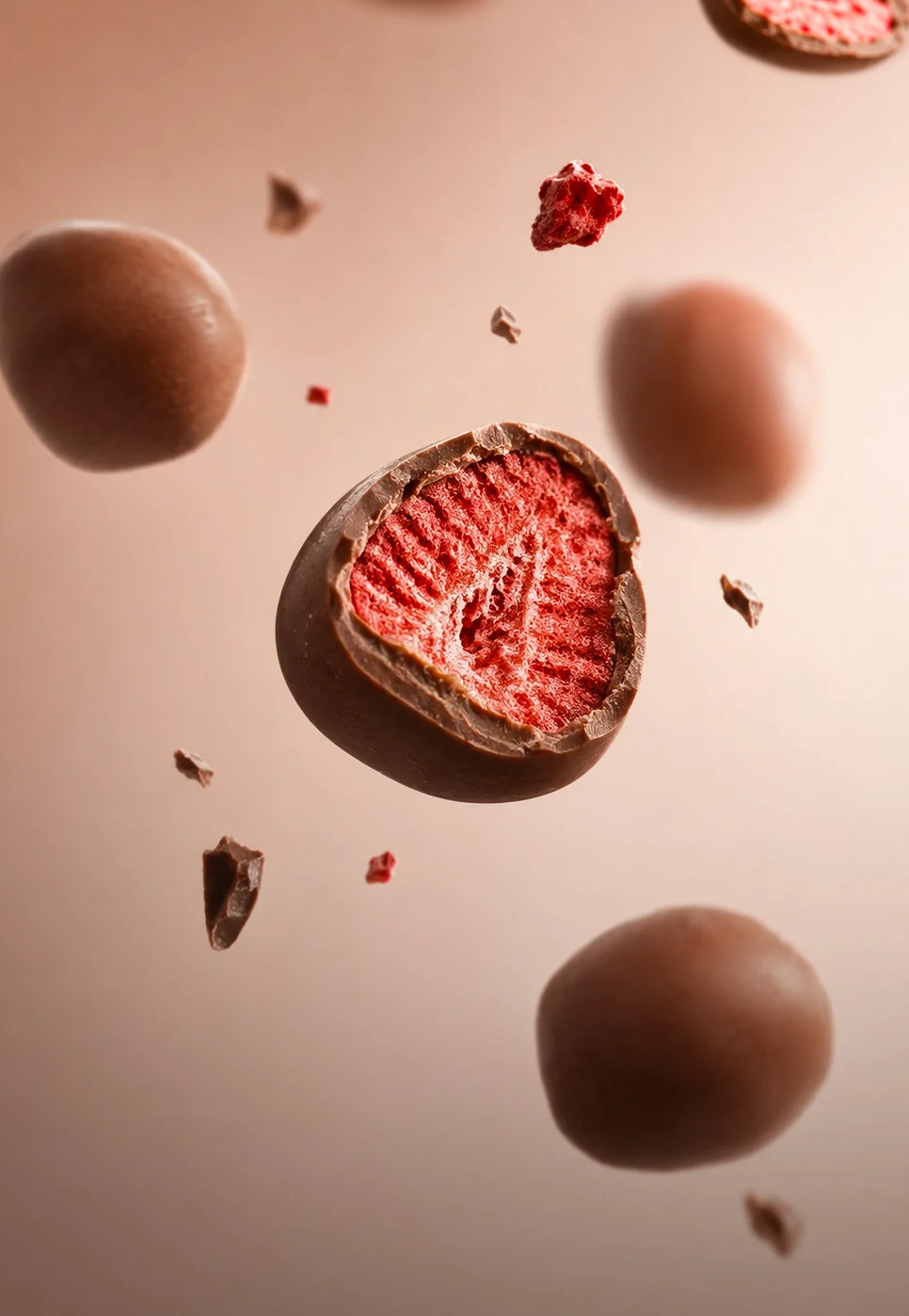
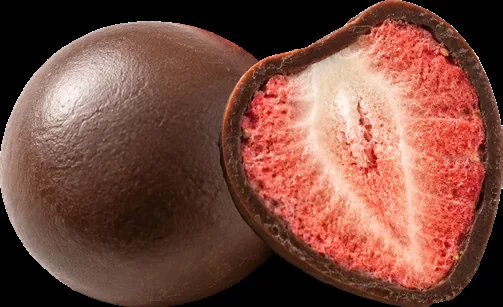
Freeze-dried fruit on its own is intense and a little dry. Chocolate solves both problems. The fat in a good Belgian coating melts at body temperature, so the first thing you taste is smooth and sweet, and the crunch arrives a second later. Sour cherry with dark chocolate, banana with milk, raspberry with white chocolate and pistachio: the pairing does the work that flavourings usually have to do.
There is also a practical reason. The chocolate shell protects the fruit from moisture, which is the enemy of anything freeze-dried. A well-made coating extends shelf life and keeps the snap alive until the last piece in the bag.
What retailers see
- A clean label. Fruit, chocolate, nothing else. No colours, no preservatives, no added flavours.
- A premium price point that customers accept. Whole fruit is visibly real, and shoppers understand why it costs more than a gummy.
- Long shelf life at ambient temperature. Twelve months is standard, with no cold chain.
- A format that works everywhere. Doypacks at the checkout, sharing bags in the confectionery aisle, gift tubs before Christmas.
How we make it in Maribor
We work with whole fruit, not pieces or powder, and we source most of it from European growers. Strawberries and raspberries arrive frozen at peak ripeness, are freeze-dried in batches and then coated in our enrobing lines under IFS Food certification. Every batch is checked for water activity before coating, because a piece that is not dry enough will soften the chocolate around it within weeks.
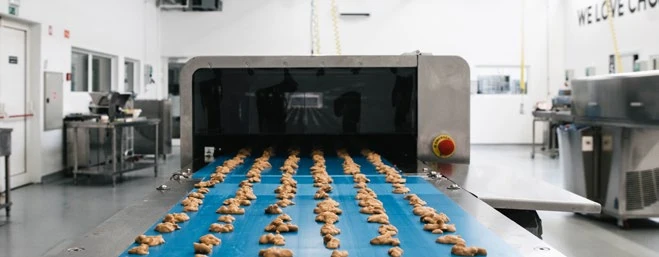
The range currently covers strawberries, raspberries, cherries, blueberries, blackberries, banana slices, mango, pineapple and apple sticks, in nine coatings from white chocolate with cream to dark chocolate with pistachio. Most private label projects start with two fruits and two coatings and grow from there.
What to ask a supplier
If you are evaluating freeze-dried fruit for your brand, three questions separate the serious producers from the rest. Is the fruit whole or reconstituted from pieces? Is the chocolate real cocoa butter chocolate or a compound coating? And does the producer control freeze-drying, coating and packaging under one roof, or is each step outsourced? The answers decide how the product tastes in month ten, not just on the day of the tasting.
If you want to taste the difference, request samples and we will send a selection to your office.